
The Meaning of a Fungal Messenger
How to Change Your MindThe book tests a poetic claim that mushrooms communicate with humans against evolutionary hypotheses and the real interdependence of ecological systems.
increasing Bearing strength in each event
 decreasing
Bearing strength in each eventdecreasingA Chemical Seems Puzzling
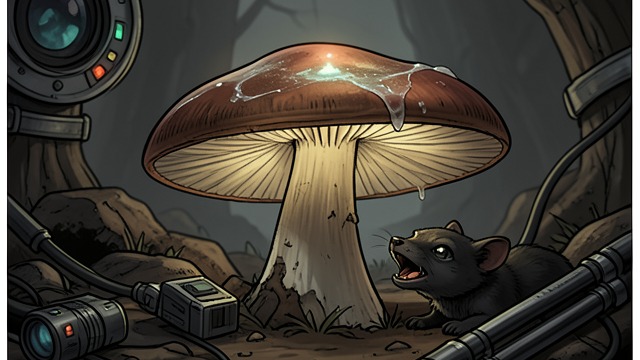
Why Make Psilocybin?
A natural mystery
The compound changes animal consciousness, yet it is concentrated in mushroom fruiting bodies. Its evolutionary purpose is not obvious from a simple defense explanation.
A question opens outward
Pollan wonders whether the drug benefits the fungus by affecting animals that eat it. The inquiry turns from human meaning toward ecological function.
A Dispersal Hypothesis
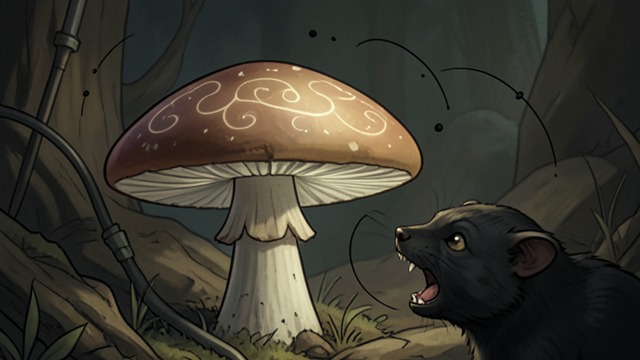
Spores Travel with Animals
Selection through consumption
Beug suggests that mushrooms producing more psilocybin may have been preferentially eaten, spreading their spores farther. The account treats animal behavior as a possible selective advantage.
Speculation remains
The hypothesis offers a natural explanation without proving why animals consume the mushrooms. It redirects the puzzle rather than resolving every detail.
Depatterning and Adaptation
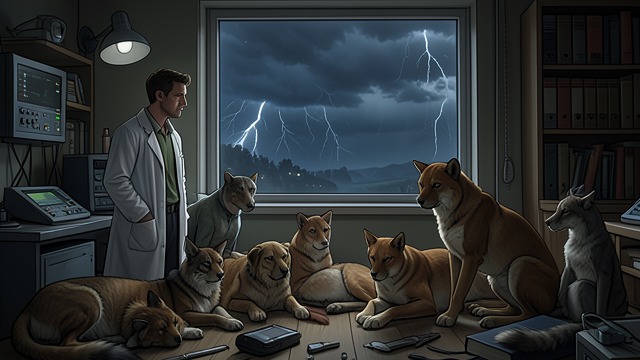
Variation in Behavior
An evolutionary analogy
Samorini proposes that psychedelics might loosen familiar responses during periods of environmental crisis. Some new behaviors could be harmful, while others might help adaptation.
A provocative extension
Pollan wonders whether this could apply to modern human crises. The suggestion is explicitly speculative, a bridge from evolutionary theory to contemporary ecological anxiety.
Stamets Hears a Message

Nature Speaks Biochemically
A personal interpretation
Stamets believes plants and fungi communicate through chemistry and enlist humans to protect the environment. He sees his own work as responding to that call.
Evidence and metaphor
His practical research lends weight to ecological interdependence, but it does not establish intentional messages from fungi. Pollan treats the idea as an evocative, unproven interpretation.
A Message Reframed
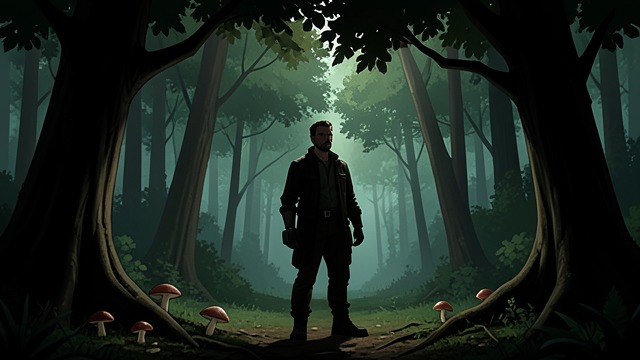
Nature as Relationship
No supernatural courier required
Pollan suggests mushrooms may help people notice relationships already present in nature. The message can be understood as a new capacity to read ecological interdependence.
Wonder without certainty
The metaphor retains its poetic force without becoming a scientific claim. Pollan ends with greater respect for nature’s agency and less confidence that the human viewpoint is exhaustive.
During Pollan’s first questions about Psilocybe
During the conversation with Michael Beug
During the discussion of Giorgio Samorini
During the Washington visit
In Pollan’s closing reflections
